

The numbers back this up. According to a 2025 analysis by Mike DelPrete using Cotality/CoreLogic data covering 85% of the U.S. market, the top 20% of agents handled 65% of all 2024 transactions. Who you recruit matters enormously.
This guide covers what it actually takes to build and keep a high-performing agent team: crafting a value proposition that resonates, sourcing the right candidates, running an outreach process that converts, and retaining agents once they're on board.
Key Takeaways
- Productivity is concentrated — the top 20% of agents drive 65% of transactions, so quality recruiting beats quantity every time
- Brand strength and support infrastructure weigh just as heavily as commission splits when experienced agents consider switching brokerages
- Recruiting is ongoing: brokerages need to replace 15–20% of headcount annually just to stay flat
- Personalized, multi-touch outreach converts far better than generic job postings
- Retention starts during recruiting: promises made in the pitch must hold once an agent joins
Why Recruiting Real Estate Agents Is the Foundation of Brokerage Growth
The Productivity Math
A brokerage's revenue potential is directly tied to the quality of its agent roster. The RealTrends data on agent career progressions makes the stakes clear: agents who stayed active had median annual production of $1,646,500, while those who left the business had median production of just $434,500. The gap between a productive agent and a churning one isn't marginal — it's the difference between a thriving brokerage and a stagnant one.
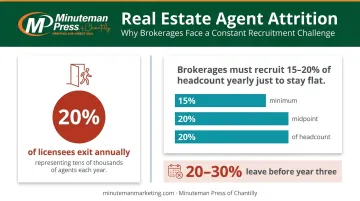
Natural attrition compounds the challenge. RealTrends reports that nearly 20% of all real estate licensees exit the industry each year, and 20–30% leave before their third anniversary. That means brokerages need to recruit 15–20% of their total agent headcount annually just to maintain current numbers — before any growth goal.
Quality Over Headcount
Adding bodies doesn't build revenue. Agents producing under $1 million annually show 35% higher rates of recording zero volume the following year. The goal is recruiting agents who will actually move the needle — not simply filling seats.
Strong recruits share three qualities:
- Align with the brokerage's vision and culture
- Maintain a consistent, healthy pipeline
- Add to team performance, not just headcount
Recruiting should be treated as a core business function — on par with lead generation and deal management. Brokerages with a structured, ongoing process absorb attrition smoothly, expand with confidence, and retain top producers longer.
Build a Brokerage Value Proposition That Top Agents Can't Ignore
Define Your Brand, Culture, and Support Model
Top agents have options. A vague pitch about "culture" and "support" won't move them — your value proposition needs to be concrete:
- Mission and identity — What does your brokerage stand for? What kind of agent thrives here?
- Culture evidence — Photos, team events, agent milestone recognition, and testimonials
- Support infrastructure — Training programs, mentorship, lead generation systems, marketing resources, and technology access
Agents — especially mid-career ones — want to know what friction you remove from their work. Document your support model explicitly and communicate it consistently across every touchpoint: job postings, social media, recruiting conversations.
Create Competitive Compensation Packages
Compensation structures vary more than most brokers realize. According to the NAR 2023 Member Profile, the most common structure in 2022 was a fixed commission split under 100% (42% of Realtors), followed by graduated splits (19%), capped splits (15%), and 100% commission models (14%).
Knowing that spread helps you position your offer accurately. Beyond splits, consider:
- Dedicated marketing budgets per agent
- Guaranteed lead sources or referral pipelines
- Professional development funding
- Sign-on bonuses for high-value recruits
- Flexibility in scheduling and territory
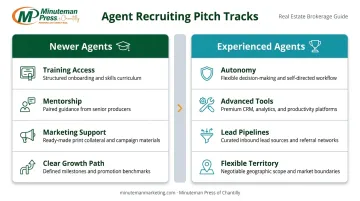
Newer agents typically prioritize training and mentorship access. Experienced agents tend to weigh autonomy, resources, and the tools that let them produce without slowing down. Build two or three distinct pitch tracks — one for each career stage — so your conversations feel tailored rather than templated.
Proven Strategies to Source and Attract Real Estate Agents
Leverage Digital Channels and MLS Data
Platforms like LinkedIn, Instagram, and Facebook serve two recruiting functions: broadcasting your brokerage culture and reaching agents directly. Organic content — team highlights, agent success stories, behind-the-scenes office content — builds brand awareness with agents who aren't actively looking but could be persuaded.
For more targeted sourcing:
- MLS data tools like Relitix (which tracks 1.2M+ agents across 180+ MLS markets) let you filter by transaction volume, specialization, or activity trends — helping identify high performers or agents who may be underserved by their current brokerage
- RealTrends Verified provides public production rankings for agents willing to be found
- Local real estate licensing schools are an often-overlooked source of motivated new agents before they've committed elsewhere
Networking, Events, and Referrals
Warm introductions convert at higher rates than cold outreach, and the real estate industry runs on relationships. Strategies that work:
- Attend local association meetings, MLS events, and industry conferences consistently
- Host your own events — lunch-and-learns, office happy hours, or educational workshops — where prospects experience your team culture firsthand
- Build a referral incentive program for current agents who recommend candidates who ultimately join; your own team members are the most credible validators of culture
Print Materials That Make Your Recruiting Stand Out
A recruiting packet or brochure creates a tangible impression that a DM or email simply can't. Agents notice when a brokerage invests in its own brand — it signals the same attention to detail they'd expect in your listing presentations.
For Northern Virginia brokerages, Minuteman Press of Chantilly is a practical local option for print recruiting materials. They offer:
- Brochures, business cards, postcards, and presentation folders — customizable with your brokerage's branding
- Same-day rush production for orders placed before 1:00 PM
- 24/7 pickup kiosk at their Chantilly location, useful before career fairs or last-minute industry events
Running a Recruitment Outreach Process That Converts
Build and Organize Your Recruiting Pipeline
Treat agent recruitment like a sales funnel. Without a structured process, outreach becomes inconsistent and follow-up falls through the cracks.
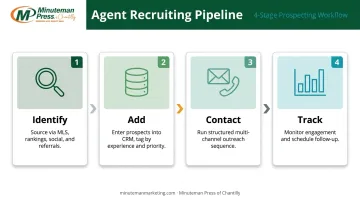
A basic pipeline structure:
- Identify candidates through MLS data, public rankings, social media, and referrals
- Add prospects to a CRM or recruiting-specific tool, tagged by experience level and priority tier
- Contact through a structured outreach sequence (email, phone, social DM)
- Track engagement and follow up based on responsiveness
Each step in that pipeline depends on one thing: personalization. Generic pitches don't land with experienced agents who field recruiting messages constantly. Reference the specific agent's recent deals, acknowledge their market specialization, and connect it directly to what your brokerage offers them — not the standard pitch you send everyone.
Nurture High-Value Prospects Over Time
Top agents rarely switch brokerages after a single conversation. Long-term nurturing keeps your brokerage top of mind — without pressure:
- Share market data or research your prospects will actually use
- Invite prospects to brokerage events or educational sessions
- Send resources that are genuinely useful, not just self-promotional
Set a defined number of touchpoints before deciding to pause outreach on a prospect — this prevents wasted effort on agents who are simply unavailable right now. Once a prospect re-engages, that's your signal to move them back up the pipeline and restart the conversation with something specific.
Interviewing, Onboarding, and Setting New Agents Up to Win
Structured Interviews and Realistic Evaluation
Skip the unstructured conversation. Behavioral-based interview questions — asking candidates how they've handled difficult negotiations, slow markets, or challenging clients — reveal judgment and professionalism more clearly than a resume. Role-play exercises or real scenario discussions during the interview add another layer of practical assessment.
Onboarding as a Retention Tool
Inman's research found only 10–20% of new agents survive beyond two years. The most common failure reasons: unpreparedness for independent contractor realities (77%), unrealistic expectations (74%), and insufficient brokerage training (58%).
Strong onboarding directly counters these failure points. Before an agent's first day:
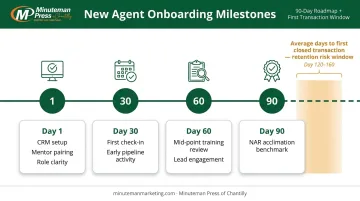
- Set up CRM access, branding materials, and role clarity in advance
- Pair them with a mentor or team leader — new agents consistently cite mentorship as the single highest-value onboarding resource
- Build a 30-60-90 day plan with clear expectations and achievable early milestones
NAR's onboarding framework puts full acclimation at 90 days — yet new licensees in many markets average 120–160 days before their first closed transaction. That gap is where agents quit. Structure your check-ins, training, and lead support to cover that full window, not just the first month.
How to Retain the Top Real Estate Agents You Recruit
Retention starts before an agent joins. Every commitment made during recruiting — around support, compensation, culture, and resources — creates an expectation. Agents who feel misled after joining become flight risks within months.
Key retention drivers:
- Honor recruiting promises — audit what you committed to during outreach and verify it's actually happening
- Recognize performance publicly — culture and recognition are underrated retention levers; agents often leave because of culture gaps, not compensation
- Collect regular feedback — survey agents at 3, 6, and 12-month marks about support gaps, tool needs, and satisfaction; act visibly on the results
RealTrends research shows switching risk peaks in years two and three and stays elevated until year eight — meaning the post-onboarding period is when most retention failures happen. Brokerages that track agent satisfaction alongside production metrics catch those risks early — before a top producer has already decided to leave.
Frequently Asked Questions
How do you recruit agents to your brokerage?
Recruiting requires a clear value proposition, targeted sourcing (social media, MLS data, events, referrals), personalized outreach, and consistent follow-up. Treat it like a sales funnel with defined stages and regular pipeline reviews — a generic job posting won't cut it.
What do new real estate agents look for in a brokerage?
New agents prioritize training, mentorship access, marketing support, and clear growth pathways. Brokerages that demonstrate these elements concretely in their recruiting conversations — rather than just claiming them — convert more new agents.
What is the 80/20 rule in real estate?
The top 20% of agents handled 65% of 2024 transactions, according to Mike DelPrete's analysis of Cotality/CoreLogic data. This concentration means recruiting a small number of high-performers has an outsized impact on brokerage revenue.
What should a recruiting presentation include?
A strong recruiting presentation covers the brokerage brand story, team culture, compensation breakdown, and support systems (training, leads, marketing tools). Close with a concrete picture of what an agent's first 90 days looks like.
How long does recruiting an experienced agent typically take?
Expect months of relationship-building, not weeks. Experienced agents evaluate moves carefully. Consistent nurturing through events, value-sharing, and regular contact is what prompts them to act.
How do you retain agents after recruiting them?
Honor the commitments made during recruiting and recognize performance consistently. Collect feedback at regular intervals and act on it visibly — agents notice when leadership listens.