Introduction
Screens are everywhere, and so is the content competing for attention on them. A well-designed printed piece (something someone can hold, pin up, or slip into their pocket) cuts through that noise in a way most digital ads simply can't.
This guide walks through what print marketing collateral is, why it still delivers results, the most effective formats with practical examples, and how to match materials to your specific goals.
Most businesses aren't short on options — they're short on clarity. Flyers or postcards? Brochures or rack cards? Matte or gloss? The wrong choice wastes budget. By the end, you'll know exactly what to order and why.
Key Takeaways
- Print marketing collateral includes any physical printed material used to promote a business, build brand recognition, or drive customer action.
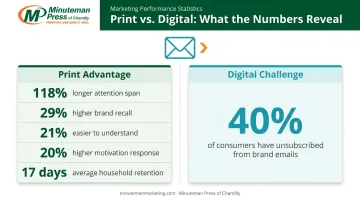
- Direct mail held attention 118% longer and produced 29% higher brand recall than digital advertising, according to Canada Post's neuromarketing research.
- Business cards, brochures, flyers, postcards, and branded stationery each serve different goals at different stages of the customer journey.
- Effective collateral pairs clear messaging and a strong call to action with consistent branding — so every piece reinforces the same identity across formats.
- Trackable elements like QR codes and offer codes connect print to digital, making campaign results measurable by individual piece.
What Is Print Marketing Collateral and Why Does It Still Matter?
Print marketing collateral is any tangible, printed material a business produces to communicate its brand, products, or services. This includes items people hold, display, mail, or hand out — business cards, brochures, postcards, banners, and branded stationery all qualify. You'll also see it referred to as "marketing collateral" or "print collateral."
Three qualities set print apart from digital:
- Stability — a printed piece stays with the recipient. Emails get buried; social posts scroll away in seconds
- Consistency — brand presentation renders exactly as designed, no algorithm or screen calibration involved
- Flexibility — print adapts to dozens of formats, finishes, sizes, and distribution methods, from a pocket-sized card to a folded brochure
The Evidence for Print's Staying Power
The numbers back this up. Canada Post's neuromarketing study found direct mail held participant attention 118% longer and generated 29% higher brand recall than digital advertising. A follow-up study found direct mail was 21% easier to understand and produced a 20% higher motivation response than digital media.
Household retention adds another layer: USPS data shows advertising mailers are kept in homes for an average of 17 days — giving a well-timed offer repeated exposure without additional cost. Meanwhile, 40% of U.S. consumers have unsubscribed from brand emails, making a physical mailer a lower-competition channel worth revisiting.
Print + Digital: Better Together
Print and digital marketing work better together than either does alone. A brochure that lands on someone's desk can sit there for weeks — a QR code printed on it pulls that same person into a landing page, a discount offer, or a sign-up form. Digital extends your reach and enables tracking; print delivers the physical presence that screens can't replicate. Used together, they cover more of the buying decision than either channel can on its own.
Types of Print Marketing Collateral with Examples
Different collateral types serve different purposes. Some are built for quick handoffs, others for detailed selling, and others for passive brand exposure. The right mix depends on your goal, your audience, and where the material will be used.
Handout and Distribution Materials
Business cards are the most fundamental piece of collateral — small, portable, and essential for any networking context. Every card should include your name, role, contact information, website, and logo. Material choices matter: thick matte card, soft-touch laminate, or textured finishes signal quality before anyone reads a word.
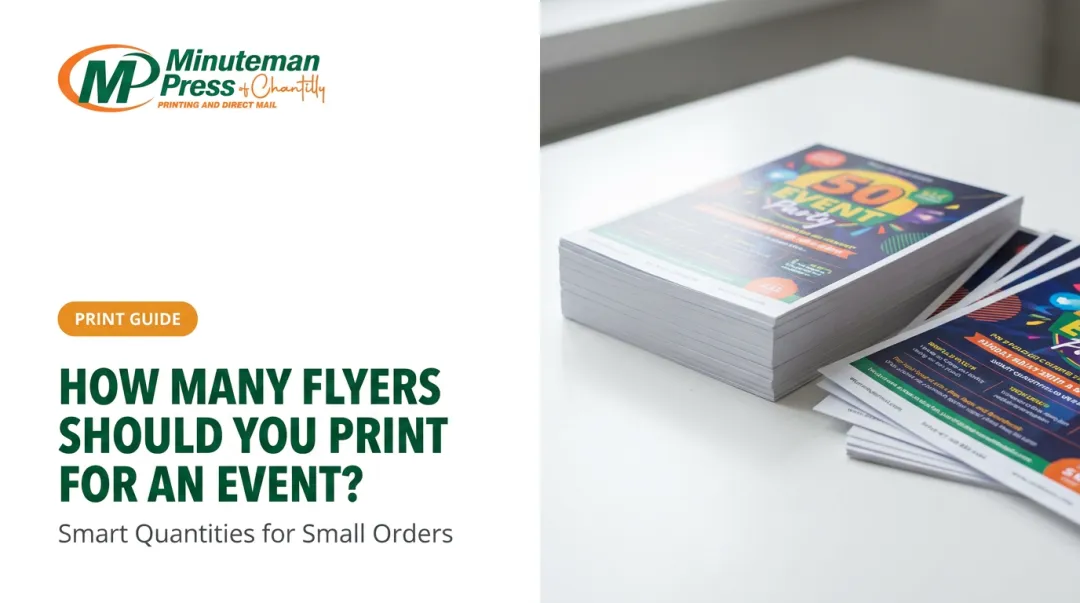
Flyers are single-sheet pieces designed for speed: easy to hand out, post on a bulletin board, or insert into a mailing. They work best with one focal message, a bold headline, and a single call to action. A flyer trying to say three things usually says none of them effectively.
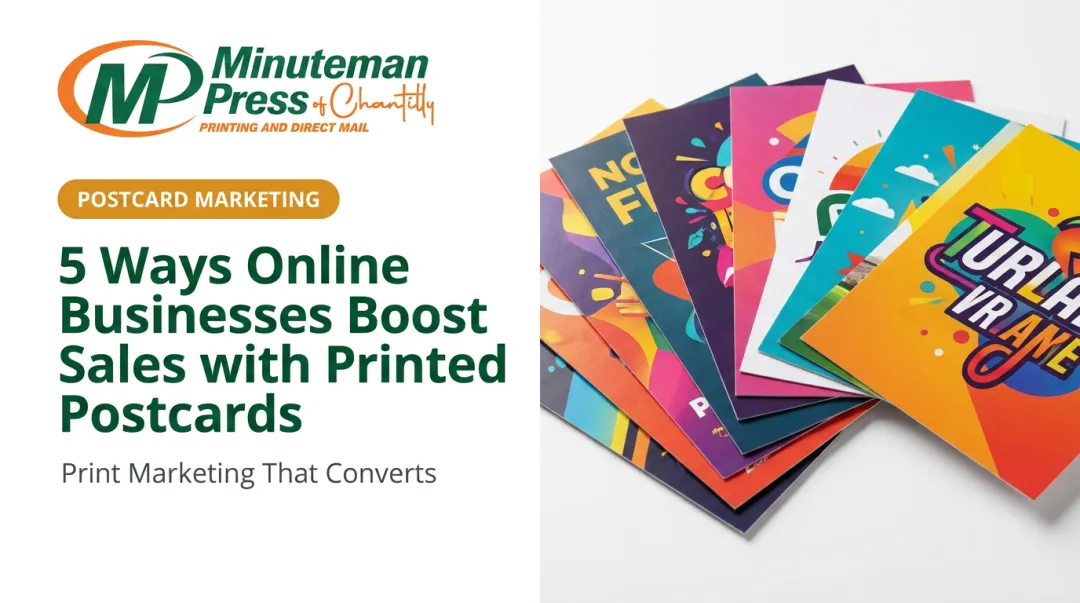
Postcards bridge handout and direct mail use. They're durable, mailable, and effective for promotional offers, neighborhood drops, and event reminders. Adding a promo code or QR code makes it trackable, so you know exactly which campaign or location drove a response. Common sizes include 4×6, 5×7, 6×9, and 6×11, giving you options from compact handouts to more content-heavy formats.
Door hangers target locally with precision. Placed directly on residential or business doors, they reach people without competing with inbox clutter. That makes them a strong option for service-area businesses promoting offers to specific neighborhoods.
Sales and Informational Materials
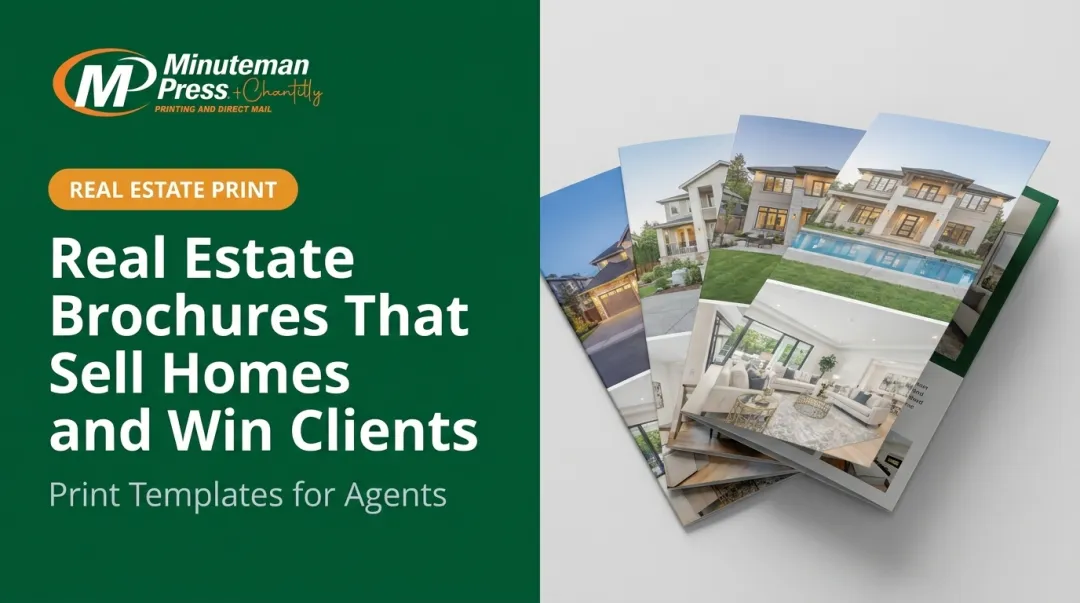
Brochures are the go-to for sharing more detail than a flyer can hold: service descriptions, product ranges, company backgrounds, pricing structures. Fold options include half-fold (2-panel), tri-fold and Z-fold (3-panel), gate-fold (3-panel), accordion-fold (4-panel), and double-gate-fold (4-panel), with sheet sizes of 8.5×11, 8.5×14, and 11×17. They work well as leave-behinds at trade shows, in waiting areas, and alongside orders.
Catalogs and booklets serve businesses with multiple offerings: retailers, service menus, product lines. Harvard Business Review reported that catalog mailings have been increasing since 2015, with controlled retail research showing catalogs lift both customer inquiries and purchases. USPS found that combining catalogs with email produced a 15% lift in sales and a 27% lift in inquiries compared with email alone.
Rack cards and sell sheets are compact single-page formats that highlight one offer, service, or product, commonly found at reception desks, hotel lobbies, and retail counters. They're low cost to print in volume and easy for prospects to take without committing to a conversation.
Brand Identity and Relationship Materials
Branded letterhead and envelopes reinforce professionalism in every written communication. Your logo, brand colors, and contact details appearing on every letter, invoice, or proposal signal that you take your brand seriously. Prospects and clients notice these details even when they don't consciously register them.
Greeting cards and branded notecards add a personal touch that digital communication rarely achieves. Sending a handwritten note on branded stationery after a meeting, sale, or milestone keeps your name top of mind and reinforces that the relationship matters beyond the transaction.
How to Design Effective Marketing Collateral for Print
Visual Hierarchy First
The most important information — your headline, offer, or event name — should be the first thing the eye lands on. Use size, contrast, and placement to guide readers through the layout in the order you want. A design that presents every element at equal weight forces the reader to do the work. Most won't bother.
CMYK, Bleed, and Resolution Requirements
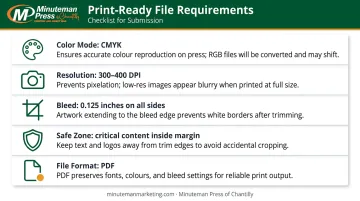
This is where many first-time print projects go wrong. Screen design defaults to RGB color mode, but commercial printing requires CMYK. Designing in RGB and converting at the last moment can cause colors to shift noticeably on press — occasionally enough to make a brand color unrecognizable.
Key technical requirements for print-ready files:
- Color mode: CMYK throughout
- Image resolution: Minimum 300 DPI (Adobe recommends 300–400 DPI for quality print output)
- Bleed: Standard bleed is 0.125 inches (3mm) on all sides beyond the trim edge, which prevents white borders from appearing after trimming
- Safe zone: Keep all critical text and logos inside the safe margin; exact measurements vary by printer template
- File format: PDF is the recommended format for print-ready uploads
Paper Stock and Finishes
Paper choice shapes how a piece feels before it's read. Heavier cardstock, such as 16PT C2S gloss or silk, conveys premium quality and suits business cards and postcards that need to hold up through handling. Lighter text-weight papers work for high-volume flyers and newsletters where cost per unit matters more than durability.
Finish choices affect both aesthetics and practical use:
| Finish | Best For | Characteristic |
|---|---|---|
| Matte | Letterhead, brochures | Readable under bright light; writable surface |
| Gloss | Postcards, business cards | Vibrant photos; polished appearance |
| Silk | Premium brochures, luxury branding | Soft-touch feel; less reflective than gloss |
| UV Coating | High-impact pieces | Adds scratch resistance and color vibrancy |
Writing Copy That Works in Print
Once your design choices are locked in, the words have to do their share of the work. Lead with a benefit, not a feature. Print space is limited, and readers won't search for the point.
Keep body copy tight and include one clear call to action per piece. "Call now," "Scan to book," "Visit us this weekend" — pick one direction and make it prominent. Burying the CTA in the footer is one of the most common reasons otherwise well-designed pieces underperform.
Connecting Print to Digital with QR Codes
Each printed piece should link to one specific action — a booking page, landing page, promotional offer, or menu. Use different QR codes on different pieces so you can track which format or distribution channel drives responses.
A few practices that improve QR code effectiveness:
- Assign a unique QR code to each piece type (postcard, brochure, flyer) for accurate tracking
- Link to a dedicated landing page, not your homepage
- Test the scan before printing the full run
- Include a short text prompt near the code ("Scan to book your appointment")
A postcard campaign and a trade show brochure linking to the same QR code tells you nothing about what's working.
How to Choose the Right Print Collateral for Your Business
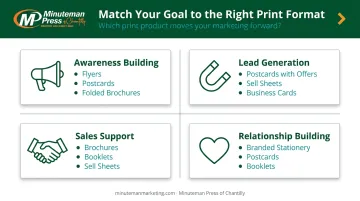
Match Collateral to the Goal
| Goal | Best Formats |
|---|---|
| Awareness building | Flyers, postcards, folded brochures |
| Lead generation | Postcards with offers, sell sheets, business cards |
| Sales support | Brochures, booklets, sell sheets |
| Relationship building | Branded stationery, postcards, booklets |
Factor in Distribution Context
Where and how a piece will be used should drive format decisions as much as the message itself.
- Trade shows call for portability and volume — business cards, flyers, and folded brochures travel well in bags
- Sales meetings benefit from polished leave-behinds: a well-designed brochure or booklet stays on a desk long after you've left
- Neighborhood campaigns work well with postcards, which land directly with local households and are easy to personalize by size and offer
- Retail or hospitality settings work well with rack cards and table tent cards, letting prospects self-select without any staff involvement
Plan Quantities Realistically
Print what you can realistically distribute within 4–6 weeks. Ordering 5,000 flyers for an event that draws 200 people doesn't create value — it creates a storage problem and materials that go stale.
Volume discounts matter, but only when quantity matches actual usage. For tight timelines, fast turnaround printing can close the gap without sacrificing quality.
Print Your Marketing Collateral with Minuteman Press of Chantilly
Minuteman Press of Chantilly handles the full range of marketing collateral — business cards, flyers, brochures, postcards, letterhead, envelopes, posters, and greeting cards — with professional design support included.
You have three design paths depending on where you're starting:
- Pre-loaded templates: Thousands of customizable templates organized by industry category — Beauty & Spa, Food & Beverage, Events & Entertainment, Real Estate, and more
- Custom design: In-house designers can build from scratch to your specifications
- Upload your own files: Submit print-ready artwork directly for production
Printing uses offset technology across a full range of paper and cardstock options — from standard text weights to 16PT premium cardstock with gloss, silk, or UV coating finishes for extra durability.
Fulfillment options are built around your timeline and location:
- Same-day production for orders placed before 1 PM
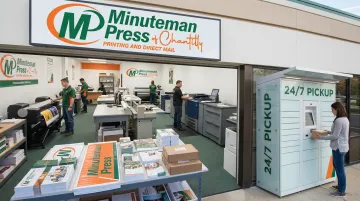
- 24/7 outdoor pickup kiosk at the Chantilly location — QR code access, no business hours required
- Courier shipping for customers outside the area
Pricing scales with quantity, with lower per-unit costs at higher volumes — and no obligation to overbuy if a small run fits the campaign.
Frequently Asked Questions
What is printed marketing collateral?
Printed marketing collateral refers to any physical, printed material a business uses to promote itself, communicate its value, or drive customer action. This includes brochures, postcards, flyers, branded stationery, and more — anything tangible that puts the brand directly in the hands of prospects or customers.
What is an example of marketing collateral?
A tri-fold brochure handed out at a trade show and a postcard mailed to local residents with a promotional offer are both examples. Each reaches a different audience in a format they can hold onto — and act on later.
What types of print collateral work best for small businesses?
Postcards and flyers are the most practical starting points — low cost, easy to distribute, and versatile across goals. Brochures make sense as the business grows and needs a format that supports more detailed selling or walk-in visibility.
How should I prepare my files for print collateral?
Use CMYK color mode, set images to at least 300 DPI, include 0.125-inch bleed on all sides, and save as a print-ready PDF. Keep critical text and design elements within the safe margin. A professional printer can catch file issues before production runs — always worth confirming on higher-volume orders.
What paper stock should I use for different types of collateral?
Heavy cardstock — like 16PT gloss or silk — suits business cards and postcards that need to hold up through handling. Standard text weight works for flyers and newsletters. Coated stocks (gloss or matte) are the better choice for brochures and catalogs where image quality and finish make an impression.