Introduction
Sellers interview multiple agents before signing a listing agreement — and according to Zillow's 2025 research, 59% hire the first agent they speak with. That single stat changes how you should approach every listing appointment.
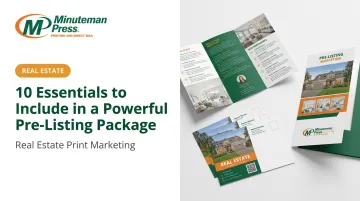
A pre-listing package shifts the dynamic before you walk through the door. Sent to prospective sellers after the appointment is scheduled but before it takes place, it introduces your credentials, demonstrates market knowledge, and answers questions sellers haven't voiced yet. The agents who win listings consistently aren't just better in the room — they arrive already trusted.
This post covers the 10 essential elements every pre-listing package should include — what goes in each section, why it matters, and how to make yours stand out.
Key Takeaways
- A pre-listing package is sent before the listing appointment to pre-sell your services and establish trust early.
- Strong packages pair personal credibility — your bio and testimonials — with hard market data and a clear marketing plan.
- Personalization is what separates packages that get read from those that get skimmed — polish alone won't do it.
- High print quality signals the same care you'll bring to marketing the seller's home.
- Showing up prepared with a complete package consistently sets agents apart from the competition.
What Is a Pre-Listing Package and Why Does It Matter?
A pre-listing package is a curated set of materials — delivered digitally, in print, or both — after a listing consultation is confirmed but before it takes place. Its job is to do the selling before you arrive.
The psychology behind it is straightforward. When sellers spend meaningful time reviewing your materials before the meeting, you've already occupied their mental space. Stanford's research on pre-suasion explains this well: persuasion can begin before the pitch by shaping how an audience frames what they're about to hear. A well-constructed package does exactly that.
The competitive context matters too. NAR's 2025 Profile of Home Buyers and Sellers found that reputation was the top selection factor for sellers at 35%, followed by honesty and trustworthiness at 22%. A pre-listing package is the most direct tool you have to demonstrate both — and you can make that impression before you've spoken a single word in person.
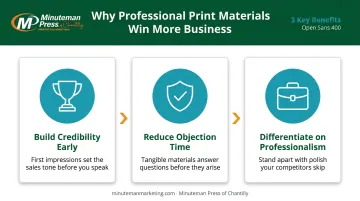
Key reasons agents use pre-listing packages:
- Build credibility early — sellers arrive at the meeting already familiar with your track record
- Reduce objection time — common concerns about pricing, process, and commission are addressed upfront
- Differentiate on professionalism — most agents show up empty-handed; a polished package signals you won't
10 Essentials to Include in Your Pre-Listing Package
Every element below serves a specific purpose. Together, they answer the seller's core questions, address unspoken concerns, and position you as the clear choice.
1. Personalized Cover Letter
Start with a warm, human tone — not a generic introduction. Address the seller by name, acknowledge their specific situation (timeline, goals, property type), and briefly explain what the package contains.
Even two or three sentences referencing the neighborhood or something mentioned during the initial call signals genuine attention. Sellers notice when a cover letter feels tailored versus templated, and that perception carries through every section that follows.
2. Agent Bio and Credentials
This section answers the seller's first unspoken question: Who is this person, and can I trust them?
Include:
- Years in the market and local expertise
- Number of homes sold (and in which neighborhoods, where relevant)
- Certifications and designations
- A professional headshot
- A brief personal story that makes you relatable — not just a list of titles
Close with a clear USP statement: one or two sentences that articulate what makes your approach different from the next agent on their list. Keep it specific. "I specialize in Fairfax County listings and have sold 47 homes in this zip code" beats "I'm a dedicated real estate professional."
3. Client Testimonials and Social Proof
No biography you write about yourself carries the weight of a client saying it. Testimonials provide third-party validation that no credentials section can replicate.
Best practices:
- Include 3–5 specific, outcome-focused quotes — sold in X days, above asking, stress-free process
- Attribute each testimonial with a real name and neighborhood where possible
- Prioritize recent testimonials; BrightLocal's 2026 research found 74% of consumers only care about reviews from the last three months
For digital or print-hybrid packages, a QR code linking to a short video testimonial adds another layer of engagement. Video is harder to dismiss than text, and it puts a real face and voice behind the praise.
4. Local Market Snapshot
Data positions you as a market expert rather than a salesperson. A local market snapshot should include:
- Recent sales in the seller's neighborhood
- Average days on market
- List-to-sale price ratios
- Current inventory levels and any notable trends
Pull this from MLS data specific to the seller's area. For agents working in Northern Virginia, Bright MLS data for the week of December 14, 2025 showed Fairfax County at a $649,995 median list price, Loudoun County at $755,165, and Arlington County at $600,000 — concrete, localized figures that carry far more weight than national averages.
This section also sets the stage for the pricing conversation. Since 83% of sellers expect to receive asking price or higher, presenting real market data here helps calibrate expectations before you're sitting at the kitchen table.
5. Comparative Market Analysis (CMA) Preview
A CMA preview is not a full CMA — it's a signal that you've done the homework.
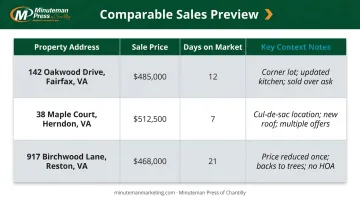
Two or three recent comparable sales with brief notes (sold price, days on market, key differences from the seller's property) show preparation and give the seller something concrete to consider ahead of the appointment. This reduces the chance they'll arrive with an unrealistic price expectation and dig in on it during the meeting.
Keep it readable. A table format works well: property address, sale price, days on market, and one line of context. The goal is to anchor the pricing conversation in evidence, not to deliver a full appraisal.
6. Your Home Marketing Plan
This is the section most agents skip — and the one sellers care about most. NAR's 2025 data shows 23% of sellers want help marketing their home as their top priority when choosing an agent.
Specificity is everything here. Vague promises ("I'll get your home maximum exposure online") don't move sellers. What does:
- Professional DSLR photography included with every listing
- Listed on Bright MLS within 24 hours of going live
- Social media details: which platforms, posting frequency, and whether paid promotion is included
- Email outreach specifics: number of contacts and list segments targeted
- Open house schedule and how each one is promoted beforehand
- Print materials: just-listed flyers, property brochures, and neighborhood mailers
Zillow's 2025 research found 78% of sellers were more likely to hire agents offering high-resolution photography and 75% for virtual tours and interactive floor plans. These aren't extras — they're decision factors.
7. Sample Marketing Materials
Sellers won't take your word for it. Actual samples make the case better than any claim.
Include physical or digital samples of your past marketing: just-listed flyers, property brochures, postcards, and neighborhood mailers. Sellers will immediately assess whether their home will be presented with the same care.
Print quality matters here. A 2018 FedEx Office survey found 90% of consumers link the quality of printed materials to the quality of the service itself — a direct connection between how your collateral looks and how sellers perceive your professionalism.
For agents in Northern Virginia and the Washington DC metro area, Minuteman Press of Chantilly produces listing brochures, flyers, postcards, and presentation folders used by NVAR member agents. Their listing brochures start at $54.95 with a minimum of 22–35 units, and same-day pickup is available via their 24/7 outdoor kiosk in Chantilly for orders placed before 1:00 PM — a practical option for agents assembling packages on tight timelines.
8. Step-by-Step Home Selling Timeline
Most sellers — especially first-timers — are more anxious about what they don't know than anything else. Opendoor's research found 75% of first-time sellers felt overwhelmed, anxious, or emotionally exhausted during the process, and 63% were surprised by the effort required for staging, repairs, and showings.
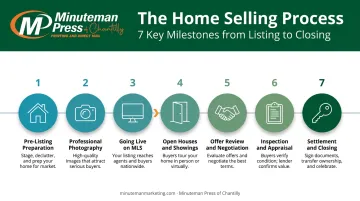
A clear, visual timeline addresses this directly. Include key milestones:
- Pre-listing preparation (staging, repairs, decluttering)
- Professional photography
- Going live on MLS
- Open houses and showings
- Offer review and negotiation
- Inspection and appraisal
- Settlement and closing
A timeline reduces anxiety and signals that you run a structured, proven process. That distinction matters when sellers are weighing their options.
9. Anticipated Seller Q&A
Including a pre-written Q&A section shows you understand what sellers are thinking before they've asked. It's also practical: answering common questions in the package means less time covering basics during the appointment and more time building rapport.
Questions to cover:
- How is the list price determined?
- How long should I expect the process to take?
- What repairs or improvements should I make first?
- What is your commission structure?
- How will I be kept informed once we're listed?
This section signals emotional intelligence — you've anticipated concerns rather than waiting to be caught off-guard by them.
10. Contact Information and Clear Next Steps
The final page should make it effortless to act. Include:
- Phone number, email, and website
- Social media handles (especially if your listings get engagement there)
- A clear statement of next steps: "I'll follow up on [day] to answer any questions and confirm our appointment time."
A professionally designed contact page with your headshot and brand colors leaves a strong final impression. It also ties the package together — consistent branding from cover to close signals the same attention to detail you'll bring to marketing their home.
Tips to Make Your Pre-Listing Package Stand Out
A strong package isn't just complete — it's cohesive and personal.
Design and presentation:
- Use consistent brand colors, a clean font, and high-quality images throughout
- A disorganized or visually inconsistent package undermines the credibility of the content inside
- Use a template tool or work with a designer if layout isn't your strength
- For luxury or high-stakes listings, a printed, bound package carries real weight
- For speed and digital-first sellers, a PDF sent via email works well
- The strongest approach: email a PDF 24–48 hours before the appointment, then bring a polished printed copy in person
Presentation sets the tone before you say a word. Personalization closes the deal.
Personalization beyond the cover letter:

- Swap in neighborhood-specific data from your local MLS
- Reference the seller's timeline or goals from your initial call
- Tailor the marketing plan to the specific property type — a condo and a four-bedroom colonial need different approaches
Sellers notice when a package feels built for them — and that attention to detail signals exactly how you'll handle their listing.
Conclusion
A pre-listing package is a strategic tool that builds trust, demonstrates expertise, and addresses objections before you've sat down with a seller. It doesn't replace the listing appointment. It makes the appointment shorter, sharper, and more likely to end with a signed agreement.
For agents in Northern Virginia and the Washington DC area, Minuteman Press of Chantilly prints brochures, flyers, postcards, and presentation folders at accessible price points — with a 24/7 pickup kiosk at 14158 Willard Road, Suite H, Chantilly, VA 20151.
Reach them at 703-378-4772 or design@minutemanmarketing.com.
Frequently Asked Questions
What is a pre-listing package in real estate?
A pre-listing package is a curated set of marketing materials sent to a prospective seller after a listing appointment is confirmed but before it takes place. It introduces the agent, showcases their expertise, and sets expectations for the selling process — all before the first in-person meeting.
When should you send a pre-listing package to a potential seller?
Send it as soon as the listing appointment is confirmed — ideally 24–48 hours beforehand. This gives the seller enough time to review the materials and arrive at the meeting already familiar with your background and approach.
How long should a real estate pre-listing package be?
Most effective packages run between 8–15 pages. That range is thorough enough to build credibility without overwhelming sellers. Prioritize quality and relevance over volume — most agents find 10 focused pages outperforms 20 padded ones.
Should a pre-listing package be printed or sent digitally?
Both formats have real merit. A digital PDF is fast and easy to share; a printed package leaves a physical, tangible impression. Many agents do both — emailing a PDF in advance and bringing a professionally printed copy to the appointment.
How does a pre-listing package help you win more listings?
It builds trust before you walk in the door and signals preparation that most competing agents skip entirely. Sellers who review your credentials and process in advance are significantly more likely to commit at the appointment.
What makes a pre-listing package stand out from the competition?
Personalization is the biggest separator. A package that references the seller's neighborhood, timeline, and property type gets read; a generic one gets skimmed. Back that up with professional design, local market data, and real examples of your past listings to make the case concrete.