Meanwhile, a postcard sits on a kitchen counter for days.
According to secondary citations referencing the 2025 ANA/DMA Response Rate Report, direct mail averages a 4.4% response rate versus just 0.12% for email — roughly 37 times higher. That gap is exactly why online-only brands are adding postcards to their marketing mix.
This article covers five concrete ways e-commerce businesses are using printed postcards to generate sales, recover lost customers, and build lasting brand loyalty — plus how to get started without a design team or large upfront investment.
Key Takeaways
- Direct mail response rates outpace email by 37x, making postcards one of the highest-converting offline channels available
- Postcards cannot be blocked by ad blockers, filtered to spam, or buried in a crowded inbox
- Five proven tactics — from retargeting site visitors to loyalty offers — give online stores a direct line to customers
- Low minimum quantities make postcard campaigns accessible for small online stores
- QR codes and promo codes make postcard ROI fully trackable
Why Online Businesses Are Turning to Printed Postcards
Postcard marketing is simple: a printed card mailed directly to a customer or prospect with one focused message and one clear call to action.
For online businesses, that simplicity carries unusual weight. Without a physical storefront, a postcard is often the only branded object a customer actually holds. No banner ad, push notification, or email can replicate that tactile moment.
Canada Post's neuromarketing research found that direct mail requires 21% less cognitive effort to process than digital media and produces 75% brand recall compared to 44% for digital. Customers don't have to decide whether to open it. They just read it.
Postcards also address three specific weaknesses that quietly drain digital-only campaigns:
- Ad blockers affect nearly 1.77 billion users worldwide, according to Backlinko
- Email spam filters intercept promotional messages before they ever reach a subscriber
- Inbox competition means your message competes against dozens of others simultaneously
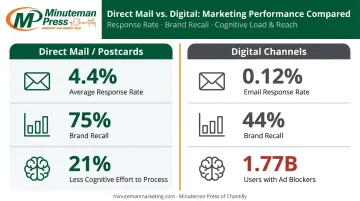
A postcard faces none of those barriers. The sections below break down five practical ways online businesses are putting that advantage to work.
5 Ways Online Businesses Boost Sales with Printed Postcards
Way 1: Re-Engage Website Visitors Through Direct Mail Retargeting
Most website visitors leave without buying. Direct mail retargeting gives you a second shot at them, this time in their hands.
The process works through address-matching technology: anonymous site visitors are identified via their browsing session and matched to a physical mailing address. A personalized postcard tied to the products or pages they viewed gets mailed within 12 to 48 hours of their visit, according to USPS documentation on retargeted direct mail.
Why this works better than digital retargeting alone:
- The postcard cannot be blocked by an ad blocker or filtered by a browser setting
- It reaches high-intent prospects — people who already know your brand and browsed specific products
- When direct mail retargeting was added to retargeted email campaigns, one study cited by SG360 found response rates were 114% higher than email retargeting alone
Abandoned cart visitors are the most valuable segment to target this way. They got close enough to add items but didn't complete the purchase. A postcard with a time-sensitive offer or a simple reminder can close that gap without requiring any digital touchpoint at all.
KPIs this affects: abandoned cart recovery rate, conversion rate from retargeted visitors, return on ad spend.
Way 2: Drive Repeat Purchases with Package Insert Postcards
Every outgoing order is a free marketing touchpoint — if you use it.
Slipping a postcard inside a shipment costs no additional postage and reaches the customer at the exact moment they're most satisfied: opening their package. That's a very different emotional state than receiving an unsolicited email.
What to put on a package insert postcard:
- A discount code for their next order (with a specific expiration date to create urgency)
- A product recommendation based on what they just purchased
- A referral incentive — "Give 15% off, get 15% off"
- A loyalty program invitation with a QR code to sign up
The economics strongly favor this approach. Harvard Business Review cites research from Bain & Company showing that acquiring a new customer can cost 5 to 25 times more than retaining an existing one — and that increasing retention rates by just 5% can lift profits by 25% to 95%.
Existing customers already trust your brand. They've already converted once. A well-timed postcard reminder — tucked into the box they're already excited to open — can turn a one-time buyer into a repeat customer. For small-batch senders, services like Minuteman Press of Chantilly offer postcard printing with no minimum order, so you can test insert campaigns before committing to volume.
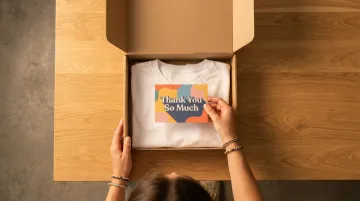
KPIs this affects: repeat purchase rate, average order value, customer lifetime value, referral acquisition cost.
Way 3: Launch Seasonal Promotions That Drive Online Traffic
Timed postcard campaigns tied to holidays, product launches, or clearance events create urgency in a way that a promotional email simply cannot match.
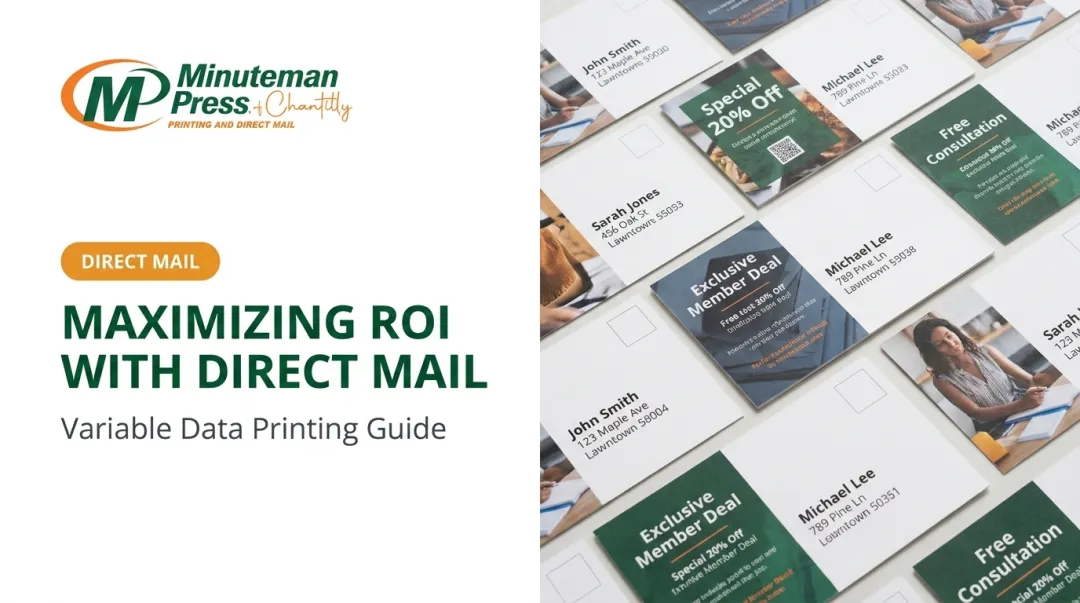
The mechanics are straightforward: print a promo code on the postcard, pair it with a QR code linking to the sale landing page, and mail to past customers or targeted prospects in advance of the event window. The customer scans the code or types in the promo — and you know exactly which orders came from that campaign.
Why physical promotions outperform digital ones for retention:
The USPS Household Diary Study (FY 2022) reports that 50% of advertising mail is read and 16% is scanned — meaning two-thirds of recipients engage with it in some way. An email deleted unread contributes nothing. A postcard sitting on the counter may convert days later.
This longevity matters most during:
- Q4 holiday campaigns — where inbox competition is at its annual peak
- Product launch windows — where you want a physical artifact supporting the announcement
- Lapsed customer reactivation — for customers who stopped opening emails, a postcard is the only viable touchpoint left
KPIs this affects: promo code redemption rate, promotional revenue, website traffic from offline sources, conversion rate during campaign windows.
Way 4: Acquire New Customers Through Targeted Direct Mail Campaigns
Digital cold outreach has a fundamental problem: people can ignore it instantly. A cold email gets deleted in a second. A cold display ad gets scrolled past.
A postcard gets handled. Even someone who's never heard of your brand will glance at it before setting it down.
Online businesses can reach new prospects using:
- Purchased mailing lists filtered by ZIP code, demographics, household income, or interest category (sourced through list brokers separately from your print order)
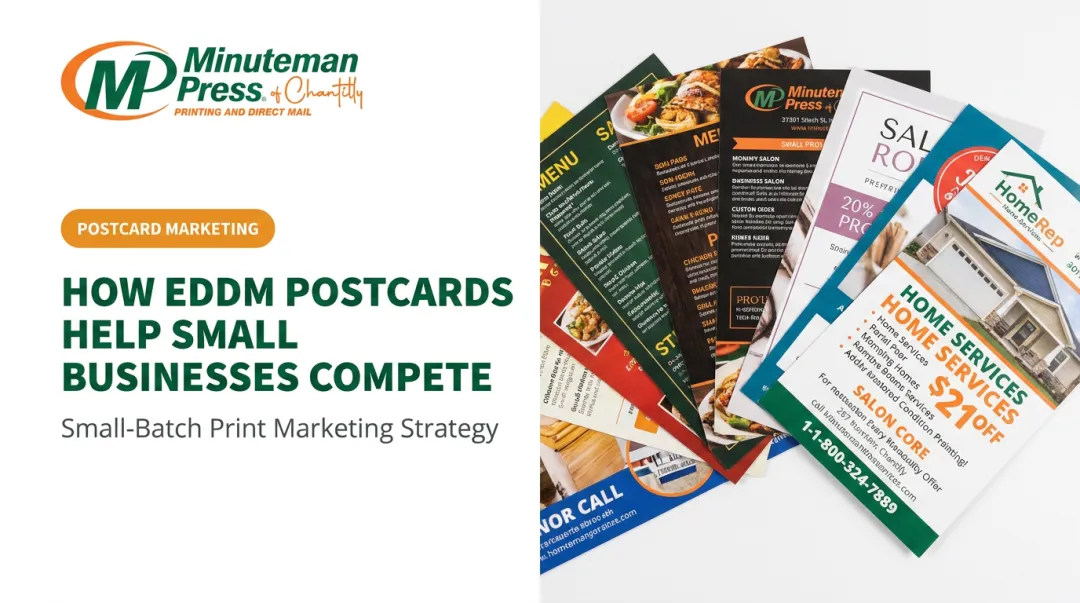
- Every Door Direct Mail (EDDM) for broad neighborhood coverage without a named list
- Lookalike targeting — mailing to households that mirror your existing customer profile
For cold outreach specifically, the response rate advantage is significant. Secondary citations to the 2025 ANA/DMA data put direct mail cold response at 4.4% — compared to an email cold response rate in the fraction-of-a-percent range. And according to Marketreach's 2021 research, 70% of consumers find mail makes them feel valued, which creates a warmer first impression than a cold email blast.
Direct mail also guarantees visibility in a way digital channels cannot. Every piece of mail gets physically sorted and handled. It doesn't need to survive a spam filter or an algorithm to reach its recipient.
KPIs this affects: customer acquisition cost, new customer conversion rate, campaign ROI, cost per new order.
Way 5: Build Brand Credibility and Long-Term Loyalty for Digital-Only Brands
Online-only businesses face a trust gap that purely digital communication can't fully bridge. Customers can't visit your store, meet your staff, or handle your product before buying. A well-designed postcard gives your brand a physical presence it otherwise lacks.
A thank-you card mailed after a first purchase signals something no digital message can fully replicate: that a real business invested real effort to acknowledge the relationship.
Personalization amplifies this effect. Addressing the customer by name, referencing their most recent purchase, or sending a birthday offer transforms a marketing piece into something that feels genuinely attentive. Canada Post's research found direct mail generates 75% brand recall compared to 44% for digital — a gap driven largely by this physical, personal quality.
Practical applications for loyalty-building postcards:
- Post-purchase thank-you cards — sent 2 to 3 days after delivery
- Anniversary offers — recognizing the customer's first purchase date with a reward
- VIP tier notifications — informing customers when they've earned a loyalty status
- Handwritten-style milestone cards — congratulating a customer on their 5th order
These touchpoints compound over time: stronger brand recall, higher Net Promoter Scores, increased customer lifetime value, and referrals driven by a mailing experience people actually remember.
KPIs this affects: customer lifetime value, NPS, referral acquisition, churn rate.
What Online Businesses Miss by Skipping Postcard Marketing
Relying entirely on digital channels creates a compounding problem. As paid media costs rise and email engagement declines, businesses with no offline touchpoint become progressively less visible to their own customers between purchases.
The specific risks are concrete:
- No recovery mechanism for lapsed customers who unsubscribed from email lists
- No reach into audiences blocking retargeting pixels
- No physical differentiation in a marketplace where every competitor looks identical on a screen
Canada Post's integrated campaign research found that direct mail combined with digital generated 39% more attention and 10% higher brand recall than digital-only campaigns. For any brand running digital-only, that's a measurable advantage being left on the table.
Skipping postcards isn't a neutral decision. It's a gap in the customer journey — one that competitors with a multichannel strategy are already filling.
How to Get Started with Postcard Printing for Your Online Business
Launching a postcard campaign takes less setup than most e-commerce owners think. The basic steps:
- Define your campaign goal — retargeting, acquisition, or retention
- Select your audience — existing customers, lapsed buyers, or a new prospect list
- Choose a postcard size — 4×6 for cost-effective volume campaigns, 5×7 or 6×9 for more visual impact
- Create your design — include a clear CTA, a trackable element (QR code or promo code), and a specific landing page URL
- Place your order and mail
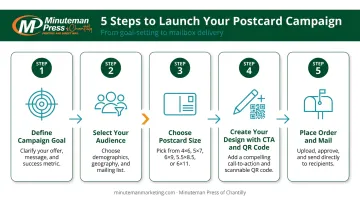
Minuteman Press of Chantilly handles all of this through a single online platform. Their catalog includes customizable templates across 16+ industry categories — fashion retail, food and beverage, events, business services, and more — with promotional postcard examples already featuring discount codes and seasonal offers. Customers can customize an existing template, upload a print-ready file, or work with the in-house design team. No design experience is required.
Tracking your results: measure postcard performance through promo code redemptions, QR code scan analytics, and dedicated landing page traffic. That data tells you which audiences responded, which offers converted, and how to refine the next send.
Frequently Asked Questions
What are the benefits of printed postcards for online businesses?
Postcards reach customers through a physical channel with no spam filters, ad blockers, or inbox competition. Read rates run significantly higher than digital channels, brand recall is stronger, and response mechanisms like QR codes and promo codes make results trackable — a measurable complement to any digital campaign.
How do postcards compare to email marketing in terms of response rates?
Secondary citations to the 2025 ANA/DMA report put direct mail response at 4.4% versus 0.12% for email — roughly 37 times higher. Postcards also bypass spam filters entirely, meaning they reach recipients that email campaigns often miss.
What should I include on a postcard to drive online sales?
Include one clear offer or CTA, a trackable promo code or QR code linking to a specific landing page, your brand visuals, and concise copy that communicates the benefit within a few seconds of reading. Simplicity converts better than density.
Can postcards be used to retarget visitors who left my website without buying?
Yes. Direct mail retargeting services match anonymous site visitors to physical addresses and can mail a personalized postcard within 12 to 48 hours of their visit. This puts your offer in front of high-intent prospects through a channel no ad blocker or pixel restriction can touch.
How do I choose the right mailing list for a postcard acquisition campaign?
Options include purchasing a filtered list by demographics (age, income, ZIP code, interests), using EDDM for broad neighborhood coverage, or mailing to your own lapsed customer list. Start with lapsed customers — they already know your brand and typically convert at higher rates than cold prospects.
How much does it typically cost to print and mail postcards for a small online business?
Postcard printing costs vary by size, quantity, and paper stock, but small batches typically run $50–$100 for a few hundred cards. Per-unit costs drop at higher quantities. Minuteman Press of Chantilly offers postcards in multiple sizes — 4×6 up to 6×11 — with no minimum order requirement, making it practical to start small and scale up as you test what works.